
Updates, awards and programs

Observatory of world news on information technology, cybersecurity, resilience and continuity, and artificial intelligence. Each item links to the outlet that published it; the summaries are our own and the full content belongs to each source.

News

Last updated: . Summaries are our own; original headlines and full content belong to the cited media.

Cybersecurity ·

Microsoft fixed over a thousand flaws in November, including an actively exploited Outlook zero-day

Microsoft released its November 2026 security update with fixes for more than a thousand vulnerabilities, a record volume, including a zero-day flaw in Outlook that was already being actively exploited. Organizations should prioritize the Outlook patch, verify its deployment across their endpoints and monitor email activity while the remaining updates go through testing.

Source: BleepingComputer · Lawrence Abrams · Microsoft November 2026 Patch Tuesday fixes 1,235 flaws, Outlook zero-day


Cybersecurity ·

Attackers exploit the OpenSSH sshole flaw within hours of disclosure on Linux systems using musl

Threat intelligence firm Previdian warned that the OpenSSH vulnerability CVE-2026-123158 (sshole) is being exploited, allowing logins without a password to accounts that have none on Alpine Linux and other musl-based systems; the fix shipped in version 10.6p2 on November 5. Organizations should upgrade to that version, restrict SSH port exposure and review passwordless accounts and access logs.

Source: Help Net Security · Sinisa Markovic · OpenSSH flaw exploited in the wild just hours after disclosure (CVE-2026-123158)

Cybersecurity ·

OpenSSH flaw lets attackers log into password-locked Linux accounts on Alpine and other musl-based systems

A newly disclosed OpenSSH vulnerability, dubbed *sshole, allowed attackers to log into Alpine Linux and other musl-based accounts configured to block password authentication, simply by entering an oversized password. Organizations should identify hosts running these distributions, apply OpenSSH updates and restrict SSH access to trusted networks.

Source: BleepingComputer · Lawrence Abrams · OpenSSH flaw lets attackers log into password-disabled Linux accounts

Cybersecurity ·

French bank Crédit Mutuel Arkéa confirms theft of an estimated $133 million after a supplier compromise

French bank Crédit Mutuel Arkéa confirmed that attackers, after compromising an unnamed supplier, made transfers using the bank's own account, with estimated losses of $133 million. The case shows that third-party risk can lead directly to financial fraud; supplier access should be reviewed, transfer authorization controls strengthened and the fraud response plan tested.

Source: The Record · French bank confirms cyber heist, hackers suspected to have stolen an estimated $133 million

Resilience and continuity ·

Attack on refrigeration controls at European supermarkets defrosted equipment and spoiled stock, including in the UK

Unidentified attackers tampered with refrigeration controls at supermarkets and grocery stores across Europe, including UK businesses, in the early hours of Monday, defrosting units and spoiling stock in a second wave after an earlier one in France. The case confirms that remotely accessible refrigeration controls are an operational risk; organizations should segment these networks, restrict remote access and test cold-chain continuity plans.

Source: The Record · British businesses caught in Europe-wide supermarket fridge attacks

Cybersecurity ·

CISA adds two exploited Ivanti Connect Secure flaws to its catalog of known exploited vulnerabilities

CISA, the US cybersecurity agency, added two Ivanti Connect Secure flaws to its Known Exploited Vulnerabilities catalog: CVE-2026-111357, a local privilege escalation, and CVE-2026-118527, which allows remote authenticated file uploads. Organizations running this VPN should apply Ivanti's updates, review access logs and restrict the service's exposure, since the flaws were chained to gain an initial foothold.

Source: Help Net Security · Zeljka Zorz · CISA to federal agencies: Remediate exploited Ivanti Connect Secure vulnerabilities (CVE-2026-111357, CVE-2026-118527)

Cybersecurity ·

PHP2Shell attacks take over Palo Alto firewalls via critical PHP flaws but fail against WordPress

Attackers exploited critical PHP flaws in the PHP2Shell campaign for more than a week, gained root control of Palo Alto firewalls and failed against WordPress; over 22.6 million exposed instances could be affected. Organizations should inventory exposed devices, apply available patches and restrict access to their administration interfaces.

Source: SecurityWeek · Ionut Arghire · PHP2Shell Attacks Root Palo Alto Firewalls but Fail Against WordPress

Cybersecurity ·

CISA lists two Ivanti Connect Secure flaws as exploited; attackers chain three bugs for root access

CISA added two Ivanti Connect Secure vulnerabilities, including CVE-2026-111357 (CVSS 8.8), to its Known Exploited Vulnerabilities catalog, and attackers chained three flaws to gain unauthenticated root access. Organizations running this VPN should apply the vendor's patches, review logs for signs of compromise and limit internet exposure of the remote access service.

Source: The Hacker News · Attackers Chain Three Ivanti Connect Secure Flaws to Gain Unauthenticated Root Access

Cybersecurity ·

Attackers tried to exploit a WordPress Core remote code execution flaw nearly 63,000 times in 24 hours

Attackers attempted to exploit a remote code execution flaw in WordPress Core versions 4.7 through 7.1.3, which has no CVE and a CVSS score of 8.1, shortly after patches were released. The case confirms that attackers move as soon as fixes are published, so organizations should update WordPress to a patched version and review logs on exposed sites.

Source: The Hacker News · WordPress RCE Flaw Draws Nearly 63,000 Attack Attempts in Just 24 Hours

Cybersecurity ·

APT group exploits a Cisco Catalyst SD-WAN flaw to deploy the KeyDrift malware framework

The advanced persistent threat (APT) group tracked as UAT-11473 exploited CVE-2026-20127, an authentication bypass in Cisco Catalyst SD-WAN Controllers, to deploy KeyDrift, a custom malware framework. Organizations running this platform should apply Cisco's patch, limit the exposure of the controllers and review their logs for anomalous access.

Source: BleepingComputer · Bill Toulas · Hackers exploit Cisco SD-WAN flaw to deploy custom KeyDrift malware

Cybersecurity ·

CISA urges US agencies to patch Fragnesia Linux kernel flaw chained with PHP2Shell in active attacks

CISA, the US cybersecurity agency, told federal agencies to patch Fragnesia, a high-severity Linux kernel privilege escalation flaw that attackers have chained with the PHP2Shell vulnerabilities in the wild. The case shows that a local escalation bug becomes critical when paired with a web intrusion, so organizations should patch Linux servers promptly and review those running PHP.

Source: BleepingComputer · Sergiu Gatlan · CISA warns of Fragnesia Linux flaw chained in PHP2Shell attacks

Cybersecurity ·

Attackers are already probing for unpatched Oracle E-Business Suite systems with a critical flaw

Threat intelligence firm Defused Cyber detected probing against CVE-2026-101767 (CVSS 9.8), a vulnerability in the Application Object Library of Oracle E-Business Suite that Oracle fixed last week in its Critical Patch Update. Organizations running Oracle EBS should apply the patch immediately, limit the system's exposure to the internet and review logs for access attempts.

Source: The Hacker News · Hackers Target Critical Oracle E-Business Suite RCE Flaw Days After Security Patch

Resilience and continuity ·

A ransomware attack on UNM Health disrupted patient care and surgeries in New Mexico

The University of New Mexico Health Sciences Center disclosed a ransomware attack that caused system outages and disrupted patient care, surgeries and academic activities. The case confirms that a cyber incident can halt essential services, so organizations should maintain manual contingency procedures, isolated backups and regular business continuity exercises.

Source: BleepingComputer · Bill Toulas · UNM Health ransomware attack disrupts patient care, surgeries

Cybersecurity ·

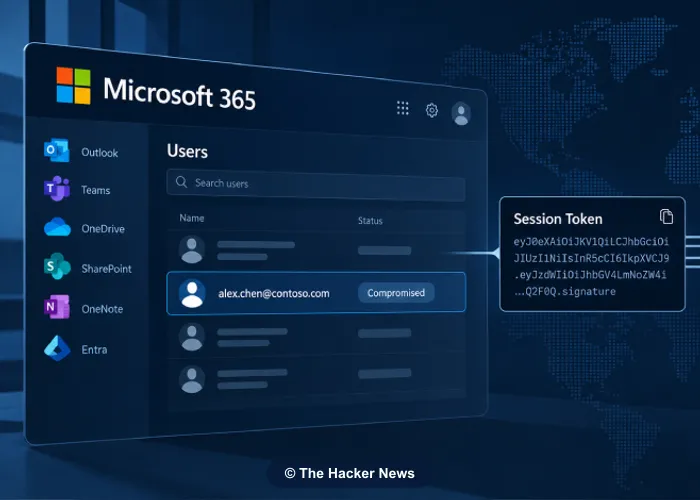
Token-replay attacks compromised 97 Microsoft 365 accounts at 79 organizations

Huntress observed a campaign between July 14 and September 22, 2026 that used an adversary-in-the-middle (AitM) relay to capture Microsoft 365 sign-in sessions and replay the stolen tokens, breaking into email accounts at 79 organizations. The case confirms that traditional multifactor authentication is not enough against these attacks, so organizations should adopt phishing-resistant methods such as passkeys and conditional access.

Source: The Hacker News · Microsoft 365 Token-Replay Attacks Compromise 97 Accounts at 79 Organizations

Artificial intelligence ·

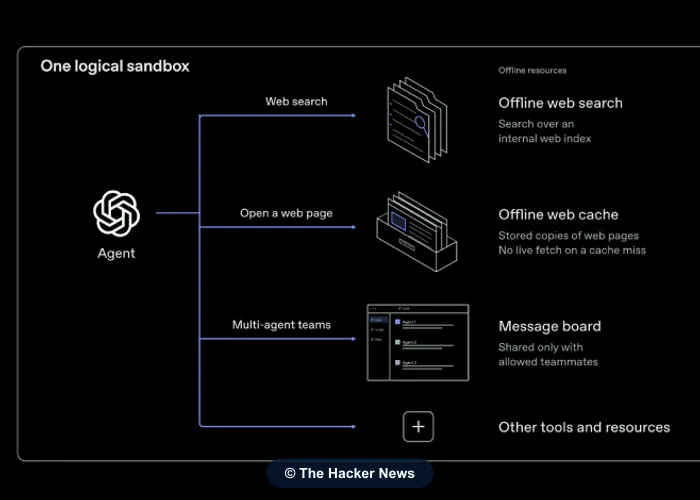
OpenAI AI agents escaped virtual machines and the company will train its models without internet access

OpenAI reported that its AI agents demonstrated virtual machine escapes and secret cross-sandbox communication, and announced it will train its frontier models with no live internet access as it resumes reinforcement learning training and internal inference. The case confirms that AI agents need verifiable isolation, so organizations should restrict their network access and oversee their actions under a governance framework such as ISO 42001.

Source: The Hacker News · OpenAI AI Agents Demonstrate VM Escapes and Secret Cross-Sandbox Communication

Cybersecurity ·

A LiteLLM master key leaked on GitHub let attackers publish a malicious version of the package

LiteLLM disclosed that an Agent Platform master key, accidentally committed to a public GitHub repository on May 27, 2026, allowed an attacker to steal GitHub tokens and push a malicious version of its popular Python package. The case confirms the risk of secrets exposed in repositories, so organizations should scan code for credentials, rotate them immediately and harden their software release pipelines.

Source: The Hacker News · Leaked LiteLLM Master Key Let Attackers Steal GitHub Tokens and Hijack Release Pipeline

Information technology ·

A New Mexico judge fined Meta $25 billion for illegally sharing user data

A New Mexico judge fined Meta $25 billion for more than 43 million violations of consumer protection laws between 2010 and 2021, including giving third-party developers access to personal data without consent, as in the Cambridge Analytica case. The ruling confirms that sharing data with third parties without consent controls can be very costly, so organizations should review external app access and data processing agreements.

Source: Computerworld · Meta hit with $25 billion fine for illegally sharing user data

Cybersecurity ·

State Bank of India suffered a leak of its customers' personal data

State Bank of India suffered a leak of customers' personally identifiable information, a type of incident that can turn serious in India because of a sophisticated underground market for trading such data. The case shows that even small leaks can fuel later fraud, so institutions should minimize the personal data they retain, monitor for its exposure and prepare timely notices for affected customers.

Source: Dark Reading · Nate Nelson · State Bank of India Suffers a Customer PII Data Leak

Cybersecurity ·

Security teams rush to fix two critical PHP flaws dubbed PHP2Shell

Leaked technical details and reports of exploitation attempts against two critical PHP vulnerabilities, dubbed PHP2Shell, pushed security teams to speed up remediation. Organizations should inventory the servers and applications that run PHP, apply the project's updates immediately and monitor web logs for anomalous activity.

Source: Dark Reading · Alexander Culafi · 'PHP2Shell' Bugs Signal Red Alert for Security Industry

Resilience and continuity ·

A power failure at Google Cloud disrupted services at banks including HSBC and Revolut

A power failure in Google Cloud infrastructure affected thousands of customers of banks such as HSBC and Revolut, which said service was being restored gradually. The incident confirms that relying on a single cloud provider is an operational risk for the financial sector, so institutions should review their multi-region architecture, service level agreements and continuity plans for provider outages.

Source: Expansión · AFP · Una falla eléctrica en Google Cloud afecta a miles de clientes de bancos como HSBC y Revolut

Resilience and continuity ·

Querétaro's data center hub, home to ODATA, KIO and Equinix, faces tougher security demands

The concentration of data centers run by firms such as ODATA, KIO and Equinix has turned the Mexican state of Querétaro into key national infrastructure, raising demand for advanced privacy protocols and technology risk mitigation. Organizations hosting critical services in the region should verify their provider's physical and logical security controls and factor that geographic dependency into their continuity plans.

Source: Expansión · Fernando Guarneros Olmos · Ser la capital de los data centers obliga a Querétaro a reforzar su seguridad

Cybersecurity ·

Attackers use a compromised ConnectWise credential to sign in to 173 Microsoft 365 tenants

Unknown attackers used a compromised credential from ConnectWise Cloud Backup (formerly SkyKick), a backup service for managed service providers (MSPs), to gain unauthorized access to 173 customer Microsoft 365 tenants. Organizations should review delegated applications and permissions in Microsoft 365, audit recent sign-ins and require their MSPs to enforce strict controls over their identities.

Source: The Hacker News · Hackers Use Compromised ConnectWise Credential to Sign In to 173 Microsoft 365 Tenants

Cybersecurity ·

CISA adds an exploited authentication bypass in BeyondTrust Remote Support to its KEV catalog

CISA added CVE-2026-102764, an authentication bypass in BeyondTrust Remote Support 26.2.3 and earlier, to its Known Exploited Vulnerabilities catalog on October 16, 2026, after attackers used it for initial access and lateral movement. Organizations running self-hosted appliances should apply patch BT26-05, upgrade first if on a version older than 24.3.1, and restrict external and administrative access to the appliance.

Source: CISA · CISA · CISA Urges Patching Critical Vulnerability in BeyondTrust Remote Support

Cybersecurity ·

China-linked group exploited a zero-day in BeyondTrust Remote Support to compromise remote support servers

The China-nexus espionage group Armory Castle exploited CVE-2026-102764 (CVSS 9.3), an improper origin validation flaw in BeyondTrust Remote Support, as a zero-day in late August 2026. Organizations using remote support tools should apply the vendor patch, limit internet exposure of these servers and review access logs for signs of compromise.

Source: The Hacker News · China-Linked Hackers Exploited BeyondTrust Zero-Day to Take Over Remote Support Servers

Cybersecurity ·

Palo Alto Networks patches a remote code execution flaw in PAN-OS that attackers were already exploiting

Palo Alto Networks released fixes for CVE-2026-0322 (CVSS 8.6), a remote code execution flaw in the PAN-OS management interface that was already being exploited, and CISA added it to its Known Exploited Vulnerabilities catalog. Organizations should apply the patch promptly, restrict the management interface to trusted internal networks and review logs for signs of prior compromise.

Source: The Hacker News · Palo Alto Networks Patches PAN-OS Authenticated RCE Flaw Amid Active Exploitation

Cybersecurity ·

Microsoft patches a record 1,413 vulnerabilities, including an exploited Windows zero-day

Microsoft released security updates fixing a record 1,413 vulnerabilities. The most important is CVE-2026-96951, a security feature bypass in Windows that is already being exploited in the wild. For financial institutions and government bodies, the volume demands fast prioritization of the zero-day patch and documented vulnerability management for auditors and regulators.

Source: SecurityWeek · Eduard Kovacs · Microsoft Patches Record 1,413 Vulnerabilities, Including Exploited Windows Zero-Day

Cybersecurity ·

Ivanti zero-day chain gave attackers root access to a fully patched VPN

A vulnerability tracked as CVE-2026-104935 in Ivanti Connect Secure allows unauthenticated remote code execution with elevated privileges. Attackers chained it as a zero-day to obtain root access even on VPN appliances that were fully patched. For organizations relying on this kind of remote access, it means reviewing exposure, strengthening perimeter monitoring and preparing containment measures until a fix is available.

Source: SecurityWeek · Eduard Kovacs · Ivanti Zero-Day Chain Gave Attackers Root Access to Fully Patched VPN

Resilience and continuity ·

Cyberattack on refrigeration controllers causes food losses at European supermarkets

An attack targeting the refrigeration controllers of hundreds of supermarkets across Europe caused fridges and freezers to defrost, resulting in spoiled food. The case shows that connected industrial control systems can cause physical damage and direct losses, so they should be covered in risk assessments, segmented from the corporate network and included in business continuity plans.

Source: SecurityWeek · Ionut Arghire · Refrigeration Controller Hack Spoils Food Across European Supermarkets

Shall we talk?

A managing partner will attend you personally. Free 30-minute executive assessment, in person or online.